Europe Buys Its Own Tomahawks as the US Gets Pulled Toward the Middle East
Germany struck a deal for US Tomahawk missiles at the NATO summit, part of a $50 billion European push for sovereign long-range strike capability while American attention splits across two wars.
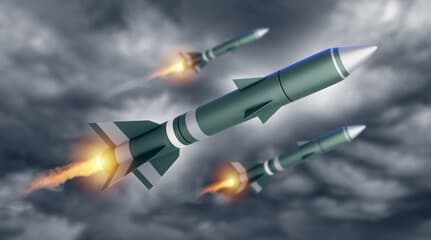
Europe Buys Its Own Tomahawks as the US Gets Pulled Toward the Middle East
At the NATO summit in Ankara on July 7-8, Germany and the United States reached an agreement that would have been difficult to imagine a decade ago: Washington agreed to let Germany procure and station US-made Tomahawk cruise missiles on German soil, under full German ownership and operational control. Chancellor Friedrich Merz confirmed the deal to the Bundestag on July 9, with a formal letter of intent signed at the summit itself. It's a significant marker of a broader shift now underway across European defense policy.
What Germany is actually buying
The agreement places Germany alongside the United Kingdom and the Netherlands as European operators of the Raytheon-built Tomahawk, a weapon capable of striking targets up to 2,500 kilometers away — far enough to reach deep into Russian territory from German soil. Unlike prior arrangements where US long-range systems in Europe remained under American control, these missiles will be German-owned and German-operated, giving Berlin an independent long-range strike capability it has not possessed in the postwar era. Germany has cited the buildup of Russian nuclear-capable Iskander missiles and hypersonic-armed fighter jets in the Kaliningrad exclave, bordering Lithuania and Poland, along with Russian plans to station nuclear weapons in Belarus, as the direct strategic rationale.
Part of a much larger European rearmament push
The Tomahawk deal isn't an isolated purchase — it's one piece of a coordinated European push toward long-range strike independence. Twelve European NATO members announced in July plans to spend roughly $50 billion over the next decade specifically on long-range precision-strike development. The UK has committed £1.4 billion to the Franco-British-Italian Stratus cruise missile program, while Germany is separately participating in the European Long-Range Strike Approach alongside France, Italy, and Poland. Merz has been explicit that the American Tomahawk purchase is an interim measure — a capability gap-filler while Europe builds toward genuinely sovereign long-range strike systems that don't depend on US manufacturing or approval.
Why the timing matters
This wave of European rearmament isn't happening in a vacuum. It's unfolding at the exact moment American military attention and resources are increasingly consumed by an escalating Iran war — a conflict that has already drained a meaningful share of global Patriot interceptor stockpiles and is now forcing hard allocation choices between Middle East and Ukraine air defense needs. European governments watching that dynamic play out have drawn a fairly direct conclusion: American strategic bandwidth is finite, currently stretched across at least two theaters, and not something European security can be built around indefinitely without a credible independent fallback.
The strategic logic, and its limits
Building sovereign long-range strike capability gives European NATO members leverage and deterrence options that don't require waiting on Washington's attention or approval during a crisis — a meaningful shift after decades of relying on US systems and, implicitly, US priorities. But the timeline is real: procurement, stationing, training, and doctrine integration for systems like Tomahawk take years, and the fully sovereign European systems like Stratus and ELSA are further out still. In the interim period this rearmament is meant to bridge, Europe remains dependent on the same American-controlled supply chains and production capacity currently being pulled toward Iran and Ukraine simultaneously — meaning the vulnerability this buildup is designed to eventually close is, for now, still very much open.
More from News

Houthi-Saudi Red Sea Truce Collapses: Aramco Sites Struck, Hodeidah Bombed, Maritime Embargo Declared
A four-year informal truce between the Houthis and Saudi Arabia has broken down within days: Houthi forces struck Saudi Aramco's Red Sea facilities, the Saudi-led coalition bombed Houthi positions in Hodeidah, and the Houthis have now declared a maritime embargo.

Iran War Latest: Strikes Stay Paused as Jordan Downs Drones and a Second Front Risks Opening in the Red Sea
The US bombing pause on Iran is holding into a second week, but Jordan has shot down two drones, Japan is urging Iranian flexibility, and a fast-deteriorating Houthi-Saudi standoff in the Red Sea threatens to open a second front while Hormuz remains shut.

Iran War Update: US Strikes Pause After 13 Nights as Oman Brokers Progress on Reopening Hormuz
For the first time in two weeks, the US did not announce new strikes on Iran this weekend. Tehran is calling the pause a victory while its foreign ministry reports progress in Oman-mediated talks on reopening the Strait of Hormuz — even as a separate incident with Ukraine and rising fuel prices complicate the picture at home.