OPEC's Existential Crisis: How the Iran War Broke the Oil Cartel's Math
OPEC production fell more than 30% during the Strait of Hormuz closure, the UAE quit the group entirely, and a symbolic output increase couldn't cover the gap. What the crisis revealed about OPEC's actual leverage.
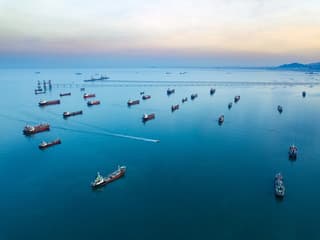
OPEC has weathered plenty of oil market shocks over its history, but few have exposed the gap between the cartel's stated coordination and its actual crisis capacity as clearly as the Strait of Hormuz closure did in 2026. When Iran effectively blocked the strait starting February 28 — a passage that normally carries about 25% of the world's seaborne oil trade and 20% of its liquefied natural gas — OPEC's collective response revealed an organization far less capable of managing a genuine supply crisis than its production quotas usually suggest.
The production math didn't add up
OPEC+ pledged to increase output by 206,000 barrels per day to offset the shortage — a figure that reads as almost token against the scale of what was actually happening. OPEC production fell by 1.7 million barrels per day in April, after plunging 7.9 million bpd in March, with total production among OPEC members dropping more than 30%, or roughly 9.7 million bpd, over the course of the war. A symbolic 206,000 bpd increase against a nearly 10 million bpd production collapse wasn't a serious mitigation strategy; it was a signal that the cartel's spare capacity and coordination mechanisms simply weren't built for a chokepoint crisis of this scale.
Individual producers went around the cartel, not through it
The more effective responses came from individual countries acting on their own initiative rather than through OPEC's collective machinery. Saudi Arabia and the UAE redirected exports to ports that bypass Hormuz entirely, while producers outside the Middle East — particularly the United States — surged exports to record levels to help fill the gap. That's a telling pattern: when the crisis actually hit, member states and non-members alike reached for unilateral workarounds rather than relying on OPEC's coordinated response, suggesting the organization's practical value during acute supply shocks is more limited than its market-moving reputation during ordinary times would imply.
The UAE's exit reflects a deeper rupture
The crisis reignited long-simmering disputes over production quotas that had already pushed the United Arab Emirates — one of OPEC's most significant members — to leave the group entirely in April. A member as consequential as the UAE walking away during the exact period when collective action mattered most is not a coincidental data point; it's a direct signal that at least some major producers concluded OPEC's quota system was constraining their ability to respond to a real crisis on their own terms, and that unilateral action served their interests better than continued membership.
What this means for OPEC's future
I think the Hormuz crisis will be remembered less as an oil price story and more as an institutional one. Some analysts now describe OPEC as being in a genuine struggle for survival, with scenarios involving oil prices as low as $40 a barrel circulating as producers reassess whether coordinated quotas still serve their interests once every member has watched the cartel prove unable to respond meaningfully to the most serious supply disruption in years. Even as shipping through Hormuz has gradually resumed, oil executives and traders expect it to take weeks or months for flows to fully normalize — and OPEC, in the meantime, is left managing not just a physical supply chain recovery, but a credibility problem about what, exactly, the organization is capable of delivering the next time a real crisis hits.
More from World
China Turns the Rare Earth Screw on Japan Over Taiwan
After Japan's prime minister spoke about Taiwan, China tightened rare earth export controls in two escalating rounds within a single month. Japan is responding with deep-sea mining and its first new refinery since 2008.

The China-Russia-Iran Axis, Tested by War
Chinese satellite access and Russian intelligence feeds have shaped Iran's targeting of US bases. The war is the clearest real-world test yet of how far the three countries' cooperation actually extends.
Latin America Splits Over the Donroe Doctrine
Brazil's Lula calls it unacceptable. Colombia's Petro says he'd 'take up arms.' Regional bloc CELAC couldn't even agree on a joint statement. How the region is actually responding to Trump's revived Monroe Doctrine.