ASEAN's Warning: The Hormuz Closure Isn't Just an Oil Story, It's a Developing-World Economic Emergency
The Strait of Hormuz has been closed since February. For wealthy importers, that's a painful price shock. For much of the developing world, ASEAN economies included, regional analysts are warning it's becoming something closer to an unrecoverable economic emergency.
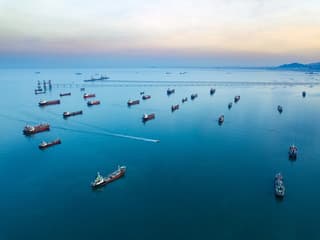
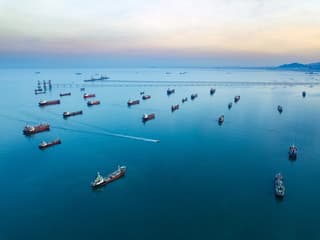
The Strait of Hormuz has been effectively closed since the US-Israeli war on Iran began at the end of February, and the International Energy Agency has already called it the largest supply disruption in the history of the global oil market. That framing tends to get discussed in terms familiar to wealthy economies: pump prices, inflation prints, central bank responses. What's getting far less attention, and deserves considerably more, is what regional analysts are now describing as a genuinely different order of crisis unfolding across ASEAN and much of the developing world — one that isn't just about paying more, but about whether the affected economies can absorb the shock at all.
The raw numbers explain why. Disruption to Hormuz threatens roughly 20 percent of global oil supply and up to 30 percent of the world's liquefied natural gas. For ASEAN specifically, up to 28 percent of the bloc's total final energy consumption has been directly disrupted by the closure, and the region's import bill has risen by an estimated $3.36 billion a month above what 2026 budgets had planned for. That's not a rounding error in a national budget — for several ASEAN economies, it's a material share of foreign currency reserves being redirected, month after month, just to keep the lights on and the ships moving at pre-crisis volumes.
Analysts tracking the crisis have been explicit that its damage doesn't distribute evenly, and that's the part of the story that separates this from an ordinary oil-price spike. Wealthier economies can absorb an energy shock through fiscal buffers, currency reserves, or simply passing costs through to consumers who have some capacity to bear them. Developing economies, ASEAN's poorer members very much included, don't have the same shock absorbers. The costs show up instead as real income that's lost every week the strait stays closed — income that, unlike a temporary price spike in a wealthy market, doesn't get recovered once conditions normalize. It's simply gone, absorbed as a permanent step down in living standards for the people who could least afford to absorb it.
The food dimension makes the emergency framing harder to dismiss as regional pessimism. The UN's Food and Agriculture Organization has warned that the Hormuz closure could trigger a global food price crisis within six to twelve months if the disruption isn't resolved, because the strait doesn't just carry oil — it's a critical corridor for the fuel and fertilizer flows that developing-world agriculture depends on for the next planting cycle. Choke off fertilizer access during a planting season and the food price consequences arrive on a delay measured in growing seasons, not weeks, which means the worst of this specific impact may not even be visible yet in current price data.
What ASEAN's warning amounts to, stripped of diplomatic phrasing, is a request that the rest of the world stop treating this as a story that ends when oil prices stabilize in Rotterdam or Singapore. A resolution to the Hormuz closure that comes six months from now still leaves behind a developing world that lost six months of unrecoverable income, a planting season disrupted by fertilizer shortages, and a food price shock still working its way through supply chains long after the geopolitical trigger has faded from the headlines. The war's most visible costs are being counted in strikes, casualties, and interceptor inventories. Its largest and longest-lasting cost may turn out to be the one showing up furthest from the actual fighting, in household budgets across economies that had no part in starting the conflict and very little capacity to absorb its price.
More from Opinion

The AI Trade's Circular Logic Meets China's Chip Breakthrough — And Wall Street Doesn't Like the Math
Nvidia's fresh $750 billion round of AI deals reignited fears of circular financing just as a Chinese state-backed firm revealed it is mass-producing homegrown DUV lithography machines and memory maker CXMT went public. Add Apple's own lobbying to use blacklisted Chinese DRAM chips, and the contradictions in the AI trade and US tech policy are showing all at once.
Trump's Iran Pause Looks Like TACO Again — And the 'Talks' He Claims Aren't the Talks Actually Happening
Trump halted strikes on Iran after roughly two weeks, framing it as progress toward talks with Tehran. Iran says it has no negotiations with the United States at present — the actual talks underway are a separate Iran-Oman bilateral channel on Hormuz shipping traffic. Add in a blunt Pentagon warning about depleted munitions, and this is starting to look like the same pattern critics labeled 'TACO' back in April.

China Isn't Catching Up to the US Anymore. On Most Fronts, It's Already Ahead.
Rare earths, solar, batteries, EVs, naval shipbuilding, AI enterprise adoption, biopharma patents, and now a Nobel laureate leaving Berkeley for Tsinghua — the list of fronts where China leads outright, not just competes, has gotten too long to explain away as isolated exceptions.