Could Pope Leo Become the Face of a Christian Reunification? Vance, Burnham, and the Quiet Catholic Turn Among Western Leaders
A US vice president who converted to Catholicism as an adult. Britain's first Catholic-born prime minister. A pope whose approval ratings rival his predecessor's across party lines. None of it adds up to Christian reunification under Rome — but it's a genuinely interesting moment for a Church that spent decades being told it was shrinking.
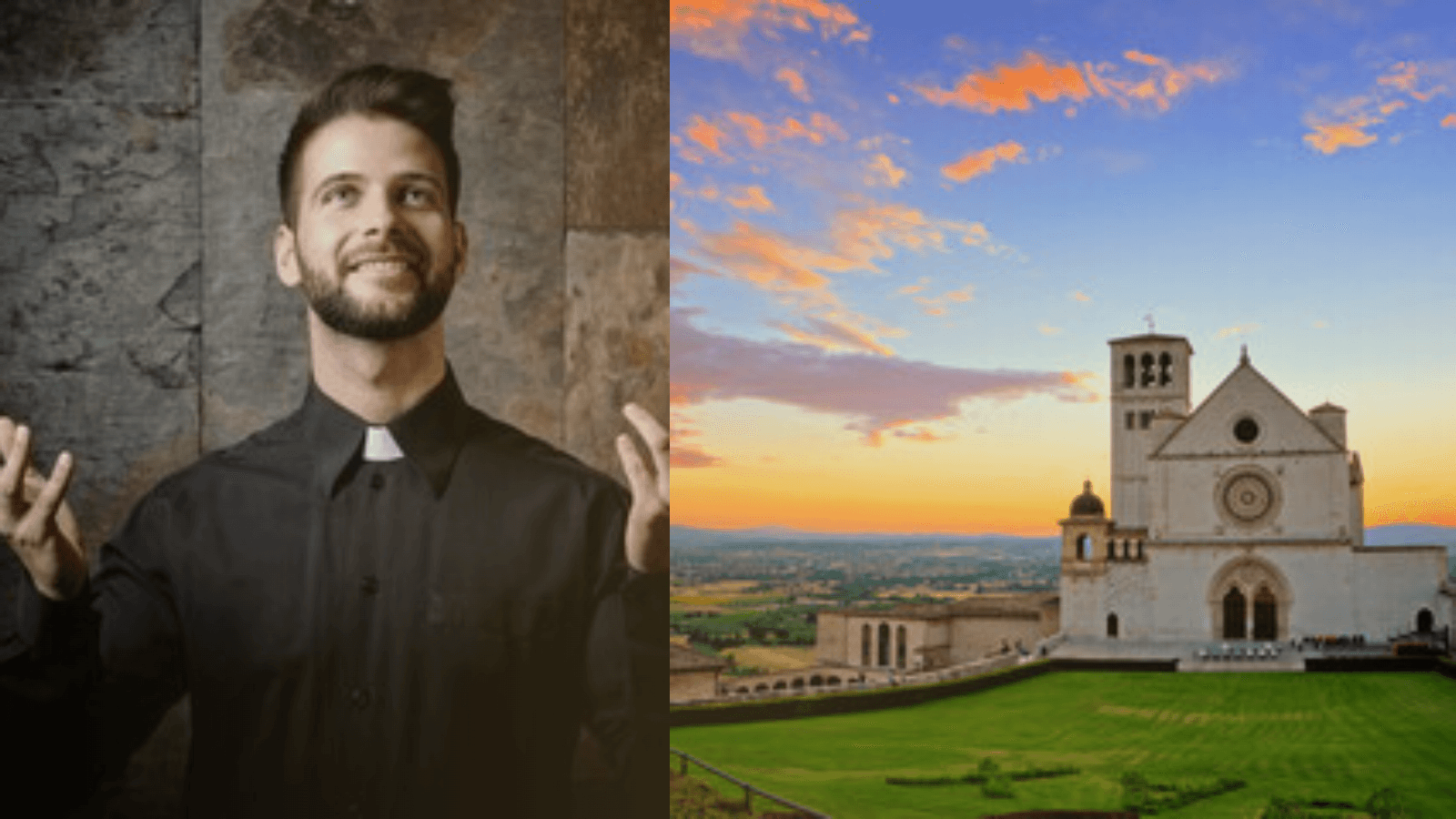
Two data points from the past several weeks are worth putting side by side, because they don't fit the story most Western commentators have been telling about religion's role in public life. On June 16, US Vice President JD Vance released "Communion: Finding My Way Back to Faith," a book about his own adult conversion to Catholicism. On July 20, Andy Burnham became the United Kingdom's 59th prime minister — and the first in British history to have been born Catholic. Neither man arrived at his current position because of his faith. But both arrivals are happening against the backdrop of a pope whose favorability numbers cut across the exact political lines that usually make consensus impossible, and that combination is worth taking seriously as a real, if early, story rather than a coincidence.
Start with Pope Leo XIV himself, because the numbers around his papacy are genuinely unusual for a religious figure in a hyper-polarized era. A recent survey found 78 percent of US Catholics view him favorably — matching Pope Francis's own favorability rating shortly before his death last year — with approval holding at 84 percent among Democratic-leaning Catholics and 72 percent among Republican-leaning ones. That's not just high; it's high with a gap between the two camps of only twelve points, in a country where religious and political identity have become almost impossible to separate on most other measures. A separate national survey of all registered voters, not just Catholics, put Leo's favorability at 42 percent against just 8 percent unfavorable — a spread most sitting politicians would consider a landslide.
Leo has also been explicit that he sees more than personal popularity in the numbers. He's pointed to a genuine, if uneven, rise in interest in Catholicism among younger people across Europe in particular — citing concrete examples like Monaco's catechumen class, which grew to 70 new candidates this year, more than double 2025's number and triple 2024's. His first major public appearance as pope, the Jubilee of Youth in Rome, reportedly drew a million people by Vatican estimates. None of this proves a "revival" in any rigorous demographic sense — youth religious engagement is notoriously hard to measure and prone to short-term spikes — but it's the kind of on-the-ground signal that gives Leo's own framing of a Catholic resurgence more than rhetorical weight.
Where the story gets genuinely interesting is in politics specifically. Vance's conversion predates his vice presidency by years and was never primarily a political act, but a sitting VP publishing a faith memoir mid-term is itself a signal about how much cultural room there now is to foreground that identity publicly, in a way that would have looked riskier a decade ago. Burnham's path is different and more complicated — reporting on his rise has been careful to describe him as "Catholic-born" and shaped by that upbringing's social teaching, rather than as a currently devout, mass-attending practitioner, and it's worth being precise about that distinction rather than flattening it into a simpler conversion narrative it isn't. What connects the two men isn't identical religious practice; it's that Catholic identity, in some form, has become politically visible and discussable for both, in offices where it would once have stayed carefully unmentioned.
So does any of this add up to the header of this piece — a unified Western Christianity under Rome, with national leaders "coming into line" behind Pope Leo? No, and it's worth being honest about why not. Two prominent examples, drawn from different countries with very different relationships to Catholicism, are not a trend line. Most Western heads of government remain Protestant, Anglican, secular, or of other faiths entirely, and the deep theological and institutional divides between Catholicism and the Protestant and Orthodox traditions that fractured from Rome centuries ago aren't dissolved by two politicians' personal biographies. Ecumenical unity has been a stated aspiration of multiple popes for generations, Leo included, without producing anything close to institutional reunification — and there's no evidence in the current data that this moment is structurally different.
What is defensible, and genuinely notable, is a narrower claim: Catholicism is having a visible cultural and political moment in the West that would have seemed unlikely a decade ago, carried by a broadly popular pope, a handful of high-profile political conversions and Catholic-shaped biographies, and measurable, if modest, upticks in youth engagement. That's a real story about religion's changing place in Western public life. It just isn't the same story as Christian reunification under a single pope — and the gap between those two claims is exactly where the more careful, more interesting version of this moment actually lives.
More from Opinion

The AI Trade's Circular Logic Meets China's Chip Breakthrough — And Wall Street Doesn't Like the Math
Nvidia's fresh $750 billion round of AI deals reignited fears of circular financing just as a Chinese state-backed firm revealed it is mass-producing homegrown DUV lithography machines and memory maker CXMT went public. Add Apple's own lobbying to use blacklisted Chinese DRAM chips, and the contradictions in the AI trade and US tech policy are showing all at once.

Trump's Iran Pause Looks Like TACO Again — And the 'Talks' He Claims Aren't the Talks Actually Happening
Trump halted strikes on Iran after roughly two weeks, framing it as progress toward talks with Tehran. Iran says it has no negotiations with the United States at present — the actual talks underway are a separate Iran-Oman bilateral channel on Hormuz shipping traffic. Add in a blunt Pentagon warning about depleted munitions, and this is starting to look like the same pattern critics labeled 'TACO' back in April.

China Isn't Catching Up to the US Anymore. On Most Fronts, It's Already Ahead.
Rare earths, solar, batteries, EVs, naval shipbuilding, AI enterprise adoption, biopharma patents, and now a Nobel laureate leaving Berkeley for Tsinghua — the list of fronts where China leads outright, not just competes, has gotten too long to explain away as isolated exceptions.